How Lacrosse Works
Here are the answers to all of your lacrosse questions. . .
What's that stick for? Why does one player have a giant stick? Why do boys and girls play with different equipment? And what's happening at that circle in the middle of the field?
The good news is that you don't need to know all the rules before your player picks up a stick. The basics are pretty simple: players use a stick to move the ball, work with their teammates and try to score in the other team's goal.
Our LAX 101 video series breaks the game down into short, easy-to-follow lessons. Start with the basics, then keep going if you want to learn more.
THE BASICS OF LACROSSE
At its simplest, lacrosse is a team sport played with a stick, a small rubber ball and two goals.
Players use the pocket of their stick to catch and carry the ball, pass to teammates and shoot at the opposing team's goal. When the other team has the ball, players defend their own goal and try to regain possession.
Each team also has a goalie whose job is to protect the goal and stop shots.
That's enough to understand what's happening when you first watch a game. But there's an important detail: boys' and girls' lacrosse are different versions of the sport.
The basic objective is the same, but the two games have different equipment, rules and styles of play.
BOYS' AND GIRLS' LACROSSE
One of the first things you'll notice is the equipment.
Boys' lacrosse includes more protective equipment because physical contact and checking are part of the game at older age levels. Players wear helmets, gloves, shoulder pads and arm protection, along with other required equipment.
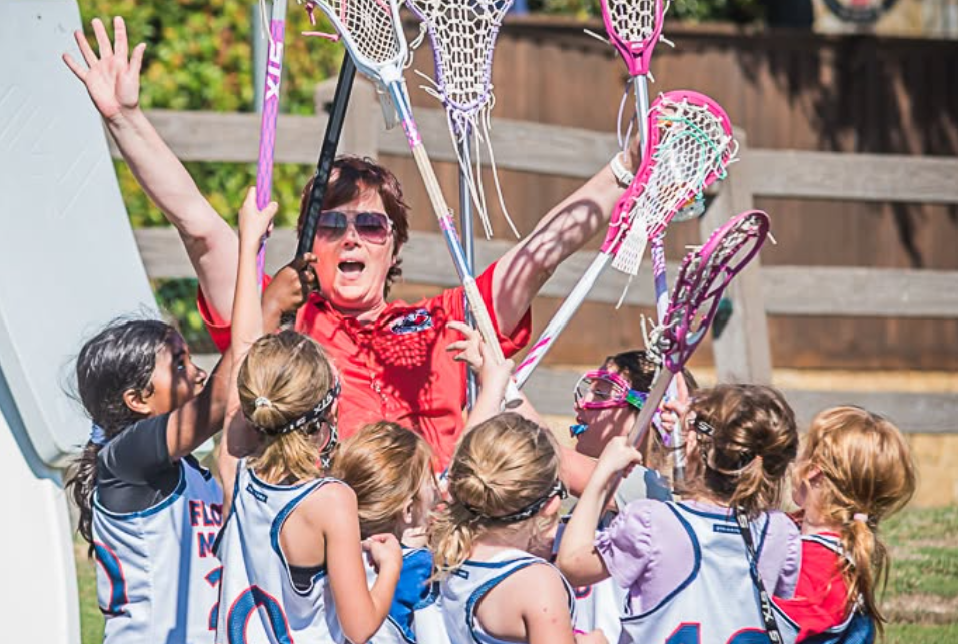
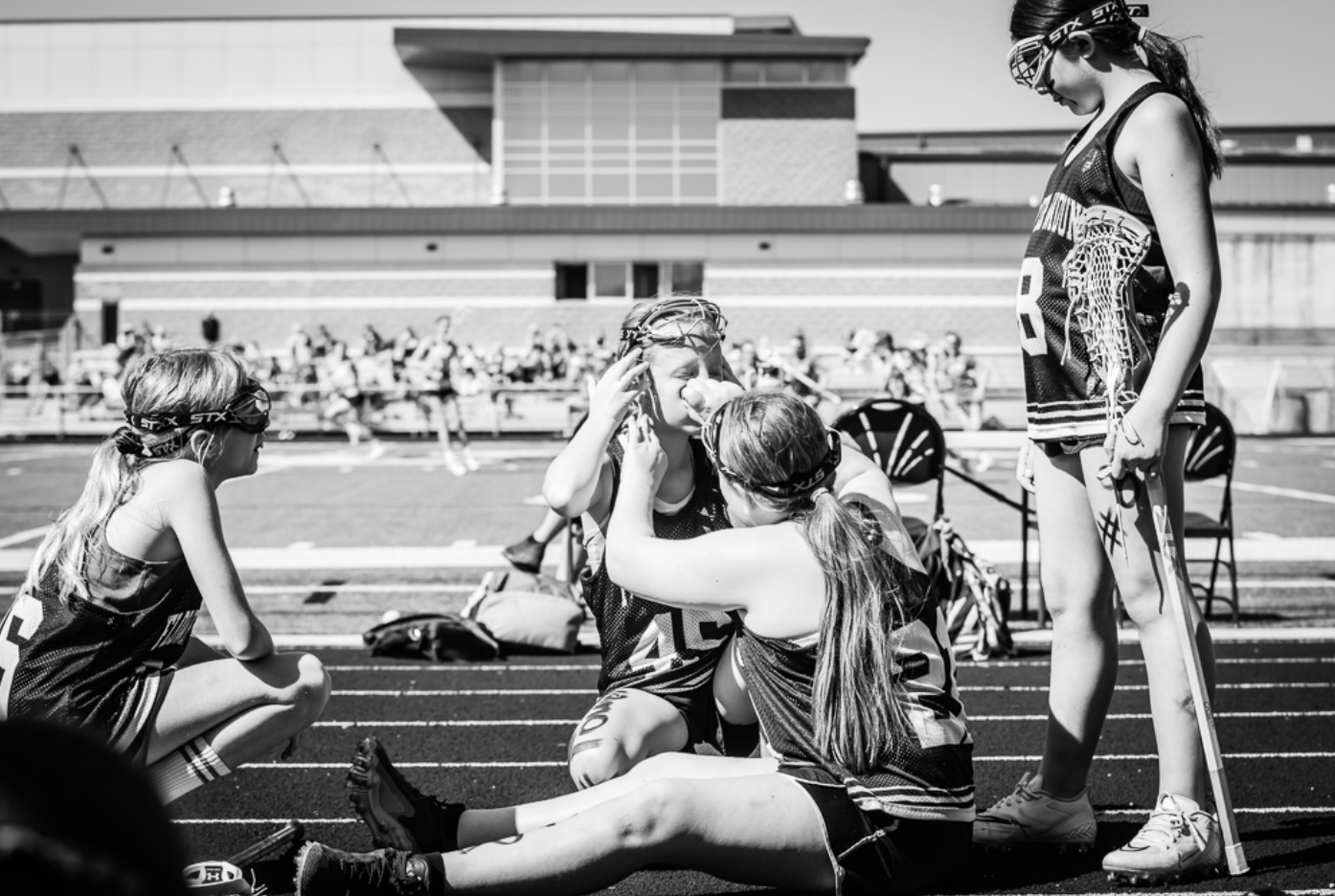
Girls' lacrosse uses a different set of equipment and rules. Players wear eye protection and mouth guards rather than the full protective equipment used in boys' lacrosse. Girls' lacrosse is not a full-contact sport, and its rules are designed to limit physical contact while allowing players to compete for the ball.
The differences aren't just about equipment. The rules governing contact, positioning and other aspects of play are also different.
THE FIELD AND HOW PLAY STARTS
Once you know the basic objective, the next thing to understand is the field.
Lacrosse fields are divided into areas of offensive and defensive play. Players move the ball up and down the field, transition between offense and defense and create opportunities to score. The field size, the number of players on the field, and where they are allowed to go varies at different ages and between boys' and girls' lacrosse.
The way play starts is also different between boys' and girls' lacrosse.
In boys' lacrosse, a face-off starts the game and restarts play after certain goals. Two players compete for possession of the ball placed on the ground at the center of the field.
In girls' lacrosse, a draw starts and restarts play. Two players meet in the center circle with the ball clamped between their sticks. On the whistle, they fling the ball into the air above their shoulders and the teams then compete for the ball after it is put into play.
THE GAME GROWS WITH THE PLAYER
Lacrosse isn't exactly the same game for a kindergartner and a high school player.
As players get older, the field, number of players and complexity of the game increase. Younger players use age-appropriate rules and smaller playing environments so they can learn the fundamentals and develop their skills before taking on the full game.
USA Lacrosse establishes age-appropriate rules and guidelines for youth lacrosse. These rules help make the game appropriate for players at different stages of development.
You don't need to memorize the rules for every age group. Coaches introduce players to the version of the game that's appropriate for their age and experience, and the game becomes more advanced as they develop.
WHERE DO PLAYERS PLAY?
Like many team sports, lacrosse has offensive and defensive positions, but exactly how those positions are used can vary between boys' and girls' lacrosse.
Depending on the version of the game, you'll see players whose primary responsibilities include:
- Attack: creating scoring opportunities and playing near the offensive goal
- Midfield: moving between offense and defense and covering a large part of the field
- Defense: protecting the goal and stopping the other team's offense
- Goalie: protecting the goal and stopping shots
Players don't simply stay in one spot for the entire game. Lacrosse is a fast-moving sport, and players transition between offense and defense as possession changes.
Watching a few minutes of actual game action can make all of this much easier to understand. Once you know the basic positions, you'll start to recognize what players are trying to do when they have the ball — and what they're trying to prevent when they don't.
IF YOU KNOW ANOTHER SPORT, YOU ALREADY KNOW SOME LACROSSE
One reason lacrosse can be fun for new athletes is that skills from other sports often translate.
If your player likes soccer, they'll recognize moving into space, passing, defending and working as a team.
If they like basketball, they'll recognize cutting, creating space, passing and looking for opportunities to score.
If they play football, they'll recognize offensive and defensive systems, transitions and the importance of reading what the other team is doing.
If they play hockey, they'll recognize the idea of using a stick to move a ball toward a goal and the quick transitions between offense and defense.
And if they play softball or baseball, they'll already be familiar with throwing, catching, tracking a ball and reacting quickly to a play.
But lacrosse also has some rules and traditions that are uniquely its own.
For example, after a player takes a shot, players may race to retrieve the ball if it goes out of bounds. The team whose player is closest to the ball when it leaves the field may be awarded possession.
There are plenty of other little things that make lacrosse its own sport, and they're part of what makes the game fun to learn.
WHERE DID LACROSSE COME FROM?
Lacrosse has a long history that reaches far beyond the modern youth and high school game.
The sport originated with Indigenous peoples of North America, who played forms of lacrosse for generations before the modern organized version of the sport developed. Today, lacrosse has grown into an international sport played at youth, high school, college and professional levels.
For players who fall in love with the game, there are opportunities to continue playing well beyond youth lacrosse, including college programs and professional leagues.
Lacrosse is also returning to the Olympic stage in 2028, giving the sport an even larger international future.
READY TO GIVE LACROSSE A TRY?
You don't need to understand every rule before you start.
Many FMLA players begin with little or no lacrosse experience. Coaches teach the fundamentals step by step, and players learn the game by practicing, playing and growing with their teammates.
If your player is curious about lacrosse, a Try Lacrosse clinic is a great place to start. FMLA provides the equipment, so there's no need to buy a stick or protective gear before your player has even tried the sport.
FIND THE NEXT TRY LACROSSE CLINIC →
Come pick up a stick, learn the basics, and see what lacrosse is all about.